🚚 Free Worldwide Shipping on All Orders!Shop Now
1 / 4
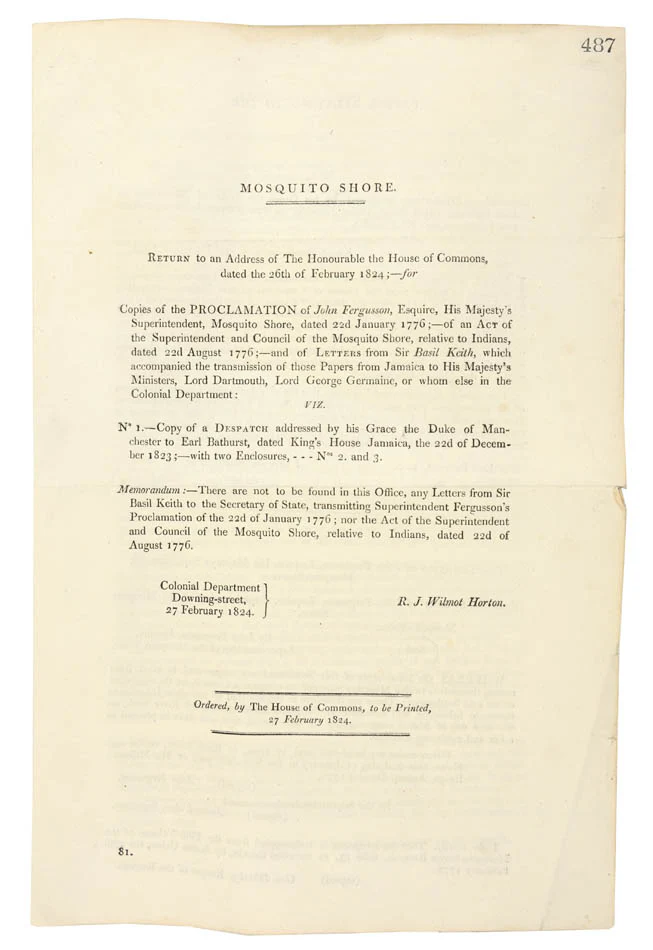
Mosquito Shore.
abolition of Amerindian slavery in Honduras
Parliamentary papers concerning the abolition of Amerindian slavery on the Mosquito Shore, a British protectorate located in present-day Honduras and Nicaragua. The report seems to have been published in the run-up to the Slave Trade Act passed in March 1824, which consolidated existing anti-slavery legislation and made the transportation of slaves a capital offence.Although Amerindian slavery had been outlawed by Jamaican law in 1741, the decree was all but ignored on the Mosquito Shore where even the superintendents of the protectorate engaged in the traffic. Worse still they encouraged the native Miskito to enslave tribesmen from the neighbouring Spanish colony of Guatemala, causing potential for diplomatic upset. In January 1776, a council of British subjects residing on the Mosquito coast was established by the temporary superintendent John Ferguson to rectify the situation, and in August that year an act was duly passed to the effect that 'all Indians who shall be offered for sale in any part of this Colony... shall be free to all intents and purposes, as any other aliens or foreigners are' (p.3).
Parliamentary report; folio (32 x 20 cm); 4ff. unbound as issued, light fold marks, minor dampstaining; 487-490pp.
$189.75
Original: $632.51
-70%Mosquito Shore.—
$632.51
$189.75Product Information
Product Information
Shipping & Returns
Shipping & Returns
Description
abolition of Amerindian slavery in Honduras
Parliamentary papers concerning the abolition of Amerindian slavery on the Mosquito Shore, a British protectorate located in present-day Honduras and Nicaragua. The report seems to have been published in the run-up to the Slave Trade Act passed in March 1824, which consolidated existing anti-slavery legislation and made the transportation of slaves a capital offence.Although Amerindian slavery had been outlawed by Jamaican law in 1741, the decree was all but ignored on the Mosquito Shore where even the superintendents of the protectorate engaged in the traffic. Worse still they encouraged the native Miskito to enslave tribesmen from the neighbouring Spanish colony of Guatemala, causing potential for diplomatic upset. In January 1776, a council of British subjects residing on the Mosquito coast was established by the temporary superintendent John Ferguson to rectify the situation, and in August that year an act was duly passed to the effect that 'all Indians who shall be offered for sale in any part of this Colony... shall be free to all intents and purposes, as any other aliens or foreigners are' (p.3).
Parliamentary report; folio (32 x 20 cm); 4ff. unbound as issued, light fold marks, minor dampstaining; 487-490pp.