🚚 Free Worldwide Shipping on All Orders!Shop Now
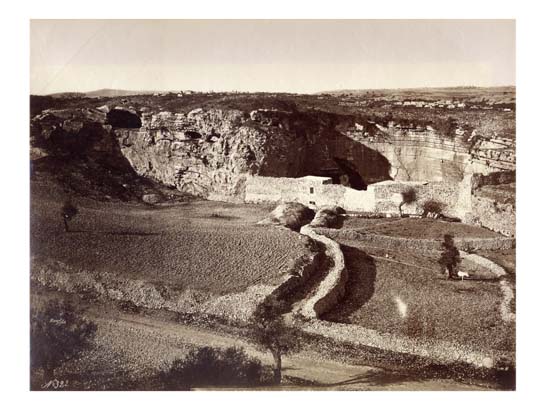
Inner facade of the gateway, Fort Agra.
Although trained as a medical doctor, Dr. John Murray excelled as a photographer. The Scottish-born doctor was introduced to photography around 1849, while in the Medical Service of the Army of the East India Company. Stationed near the Taj Mahal in Agra, he evidently developed a considerable interest in the Mughal architecture of the region. Throughout the forty-year period that Murray lived and worked in India, he systematically recorded many famous buildings in and around Agra and the northern state of Uttar Pradesh.
In the mid-1800s, no simple method of enlarging photographs existed. To make a sizable print, Murray worked with a large-format wooden camera capable of accepting negatives up to 16 by 20 inches. He worked with both glass and waxed-paper negatives; traveling photographers and those in remote places found the waxed-paper negatives particularly useful because the paper did not require immediate development. With this unwieldy equipment, Murray produced a body of work documenting India's architecture that remained unsurpassed in the 1800s. (J. Paul Getty Museum).
Albumen print, 35.8 x 43.7 cm. (14 x 17.25 inches). Mounted on card. Good tonal range and in good condition, small scratch in lower right corner, title in manuscript on card; Dimensions: 358 x 437mm. (14 x 17.25 inches).
In the mid-1800s, no simple method of enlarging photographs existed. To make a sizable print, Murray worked with a large-format wooden camera capable of accepting negatives up to 16 by 20 inches. He worked with both glass and waxed-paper negatives; traveling photographers and those in remote places found the waxed-paper negatives particularly useful because the paper did not require immediate development. With this unwieldy equipment, Murray produced a body of work documenting India's architecture that remained unsurpassed in the 1800s. (J. Paul Getty Museum).
Albumen print, 35.8 x 43.7 cm. (14 x 17.25 inches). Mounted on card. Good tonal range and in good condition, small scratch in lower right corner, title in manuscript on card; Dimensions: 358 x 437mm. (14 x 17.25 inches).
$723.64
Original: $2,412.12
-70%Inner facade of the gateway, Fort Agra.—
$2,412.12
$723.64Product Information
Product Information
Shipping & Returns
Shipping & Returns
Description
Although trained as a medical doctor, Dr. John Murray excelled as a photographer. The Scottish-born doctor was introduced to photography around 1849, while in the Medical Service of the Army of the East India Company. Stationed near the Taj Mahal in Agra, he evidently developed a considerable interest in the Mughal architecture of the region. Throughout the forty-year period that Murray lived and worked in India, he systematically recorded many famous buildings in and around Agra and the northern state of Uttar Pradesh.
In the mid-1800s, no simple method of enlarging photographs existed. To make a sizable print, Murray worked with a large-format wooden camera capable of accepting negatives up to 16 by 20 inches. He worked with both glass and waxed-paper negatives; traveling photographers and those in remote places found the waxed-paper negatives particularly useful because the paper did not require immediate development. With this unwieldy equipment, Murray produced a body of work documenting India's architecture that remained unsurpassed in the 1800s. (J. Paul Getty Museum).
Albumen print, 35.8 x 43.7 cm. (14 x 17.25 inches). Mounted on card. Good tonal range and in good condition, small scratch in lower right corner, title in manuscript on card; Dimensions: 358 x 437mm. (14 x 17.25 inches).
In the mid-1800s, no simple method of enlarging photographs existed. To make a sizable print, Murray worked with a large-format wooden camera capable of accepting negatives up to 16 by 20 inches. He worked with both glass and waxed-paper negatives; traveling photographers and those in remote places found the waxed-paper negatives particularly useful because the paper did not require immediate development. With this unwieldy equipment, Murray produced a body of work documenting India's architecture that remained unsurpassed in the 1800s. (J. Paul Getty Museum).
Albumen print, 35.8 x 43.7 cm. (14 x 17.25 inches). Mounted on card. Good tonal range and in good condition, small scratch in lower right corner, title in manuscript on card; Dimensions: 358 x 437mm. (14 x 17.25 inches).