🚚 Free Worldwide Shipping on All Orders!Shop Now
1 / 10
Protomathesis:
a monument of the book arts
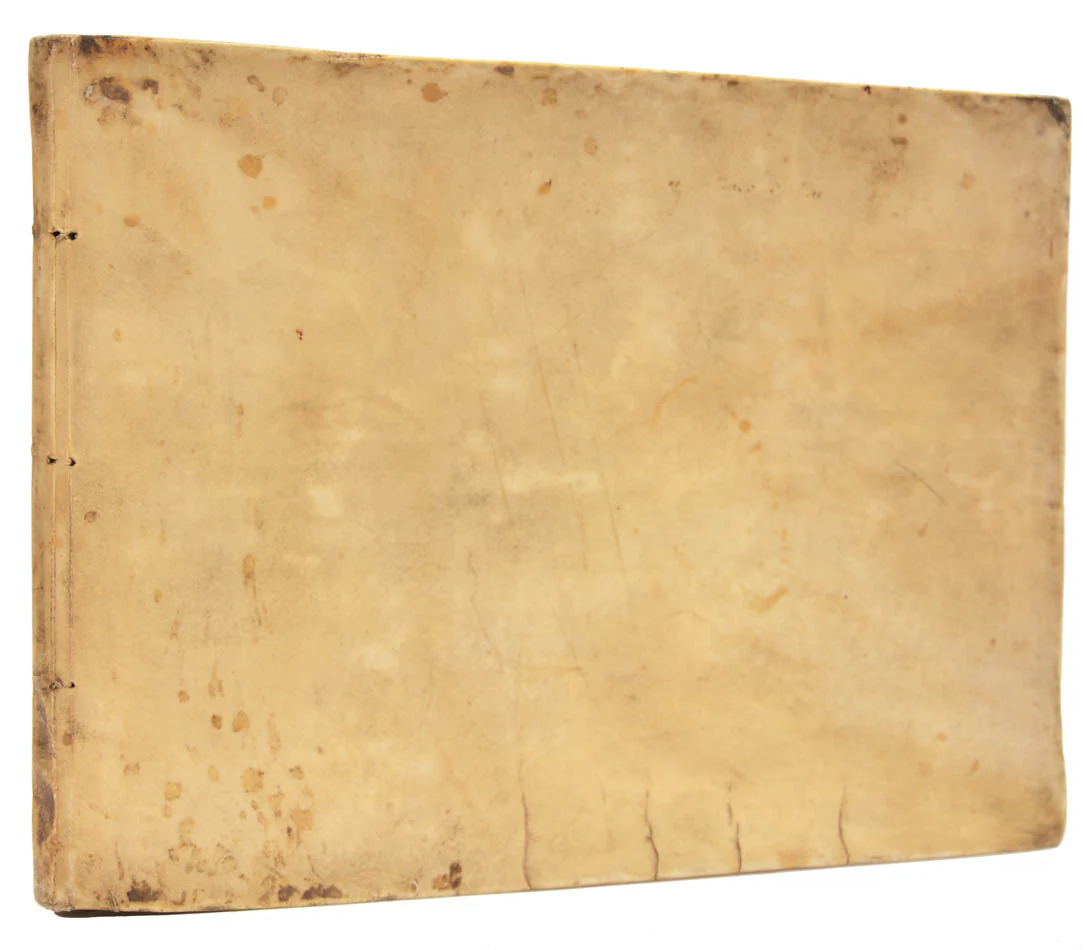
First collected edition. A magnificent, large copy of this beautifully illustrated publication encompassing arithmetic, geometry, cosmography, and sundials. It contains the first printings of many of Finé's texts and more than two hundred fine woodcuts. In a handsome, contemporary binding likely produced in Spain.Finé (1494-1555) was Regius Professor of mathematics at the Collége Royal, recently founded by Francis I of France, to whom this volume is dedicated. He was also a talented artist and map-maker whose work 'is closely related to his major fields of mathematics, astronomy, and geography, and his contribution to book production is particularly interesting in extending beyond the illustration to the ornamentation of scientific texts' (Mortimer 225).
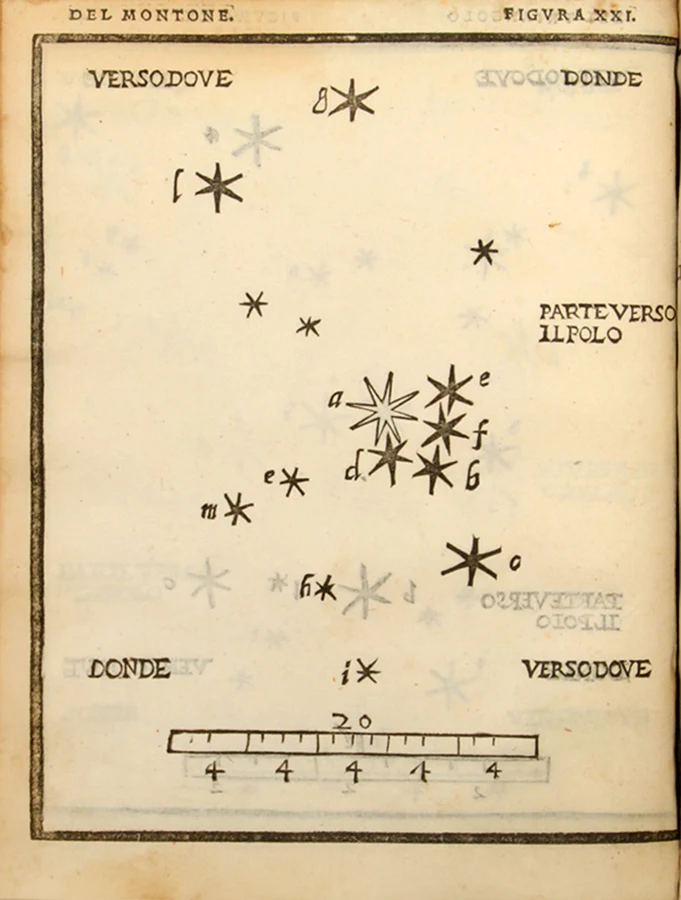
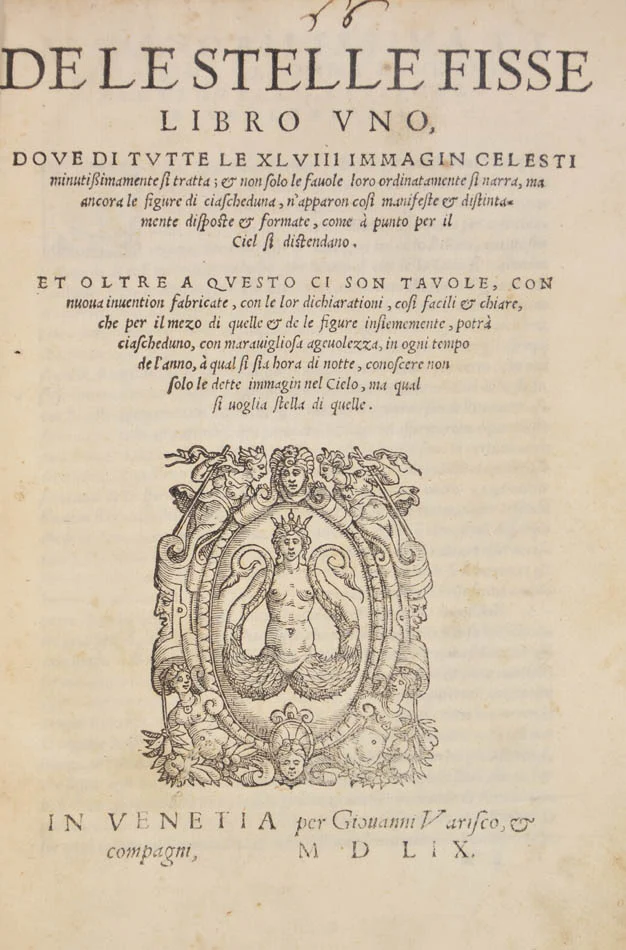
The present volume is the most important and lavish example of his design work, beginning with a fine architectural title page border with a lunette of Hercules defeating the Lernean Hydra, followed by a full-page woodcut representing the goddess of astronomy, Urania, lecturing the author, who holds a book and an astrolabe beneath a spherical model of the solar system. The other woodcuts include geometric figures, polyhedra, depictions of the Ptolemaic solar system, diagrams of planetary orbits, Finé's 'octant mesh' for mapping an eighth of the globe, and detailed renderings of instruments including quadrants, cross-staves, sundials, geometrical squares, astronomical rings, astrolables, and the hydraulic astronomical clock.
The text is in four parts, the first two dealing with arithmetic and geometry, the third with cosmography, and the fourth with gnomonics, the art of designing and using sundials. The text is didactic and practical in nature, encompassing fields such as navigation and surveying, with Finé explaining in the preface that his aim is to 'show the importance of mathematics, and to place practical mathematics on a sure theoretical footing... Given Finé's interest in instruments, and his statements about the need to ground practical mathematics in theoretical understanding, it is perhaps no surprise that the fourth book 'Concerning sundials and quadrants' includes descriptions of how to make and use a variety of sundials' (Eagleton, The Worlds of Oronce Finé, p. 85).
First collected edition; folio (37.5 x 26.5 cm); title in elaborate woodcut architectural border by Lassere, 2 full-page woodcuts depicting Urania and the author beneath a celestial sphere, 280 fine woodcut illustrations and diagrams within the text, historiated initials and head and tail-pieces, tables in the text, without the blank leaves F8 and N6 or the errata leaf, leaf 193 misprinted as 194, leaf 209 misprinted 207, 17th or 18th century notes to title and front pastedown, some short closed tears in the margins of the title and early leaves professionally repaired with tissue, occasional small manuscript notes, marks, and spots within the text but overall contents fresh; contemporary limp calf, likely Spanish, elaborately panelled in blind with floral tools and roll featuring portrait heads, 7 raised bands, gilt and gauffered edges, edges, corners, and ends of spine repaired, some scuffs and marks to the calf, very good condition; 207 leaves.
Smith, Rara Arithmetica, pp. 160-161; Stillwell, The Awakening Interest in Science 838; Mortimer, French 16th Century Books 225
$2,274,066.90
Original: $7,580,222.99
-70%Protomathesis:—
$7,580,222.99
$2,274,066.90Product Information
Product Information
Shipping & Returns
Shipping & Returns
Description
a monument of the book arts
First collected edition. A magnificent, large copy of this beautifully illustrated publication encompassing arithmetic, geometry, cosmography, and sundials. It contains the first printings of many of Finé's texts and more than two hundred fine woodcuts. In a handsome, contemporary binding likely produced in Spain.Finé (1494-1555) was Regius Professor of mathematics at the Collége Royal, recently founded by Francis I of France, to whom this volume is dedicated. He was also a talented artist and map-maker whose work 'is closely related to his major fields of mathematics, astronomy, and geography, and his contribution to book production is particularly interesting in extending beyond the illustration to the ornamentation of scientific texts' (Mortimer 225).
The present volume is the most important and lavish example of his design work, beginning with a fine architectural title page border with a lunette of Hercules defeating the Lernean Hydra, followed by a full-page woodcut representing the goddess of astronomy, Urania, lecturing the author, who holds a book and an astrolabe beneath a spherical model of the solar system. The other woodcuts include geometric figures, polyhedra, depictions of the Ptolemaic solar system, diagrams of planetary orbits, Finé's 'octant mesh' for mapping an eighth of the globe, and detailed renderings of instruments including quadrants, cross-staves, sundials, geometrical squares, astronomical rings, astrolables, and the hydraulic astronomical clock.
The text is in four parts, the first two dealing with arithmetic and geometry, the third with cosmography, and the fourth with gnomonics, the art of designing and using sundials. The text is didactic and practical in nature, encompassing fields such as navigation and surveying, with Finé explaining in the preface that his aim is to 'show the importance of mathematics, and to place practical mathematics on a sure theoretical footing... Given Finé's interest in instruments, and his statements about the need to ground practical mathematics in theoretical understanding, it is perhaps no surprise that the fourth book 'Concerning sundials and quadrants' includes descriptions of how to make and use a variety of sundials' (Eagleton, The Worlds of Oronce Finé, p. 85).
First collected edition; folio (37.5 x 26.5 cm); title in elaborate woodcut architectural border by Lassere, 2 full-page woodcuts depicting Urania and the author beneath a celestial sphere, 280 fine woodcut illustrations and diagrams within the text, historiated initials and head and tail-pieces, tables in the text, without the blank leaves F8 and N6 or the errata leaf, leaf 193 misprinted as 194, leaf 209 misprinted 207, 17th or 18th century notes to title and front pastedown, some short closed tears in the margins of the title and early leaves professionally repaired with tissue, occasional small manuscript notes, marks, and spots within the text but overall contents fresh; contemporary limp calf, likely Spanish, elaborately panelled in blind with floral tools and roll featuring portrait heads, 7 raised bands, gilt and gauffered edges, edges, corners, and ends of spine repaired, some scuffs and marks to the calf, very good condition; 207 leaves.
Smith, Rara Arithmetica, pp. 160-161; Stillwell, The Awakening Interest in Science 838; Mortimer, French 16th Century Books 225