🚚 Free Worldwide Shipping on All Orders!Shop Now
1 / 5
Arctic Expedition, 1875-6.
One of the most valuable sources for the history of exploration in northern Canada.
The Nares expedition, so called after its commander George Nares (1831-1915), sailed in two ships, HMS Alert and HMS Discovery, in late May of 1875 in quest of the North Pole. The ships reached Lady Franklin Bay on North Ellesmere Island and the Alert went on to reach the extreme north of the island, the highest latitude that had yet been reached by a ship. In April 1876, three separate sledge parties set out but the men showed serious signs of scurvy and several members died. Nares was forced to abandon the expedition and returned to England in September that year.
Despite the difficulties faced by the expedition, it did produce important scientific results including a study of Inuit dog disease and a volume of physical observations.
The Nares expedition is one of the best documented Arctic expeditions, with eight Parliamentary Blue Books alone devoted to it between 1875 and 1878. Arctic explorer Vilhjalmur Stefansson wrote '[The Arctic Blue Books] are beyond comparison the most important tool of knowledge in this field...'
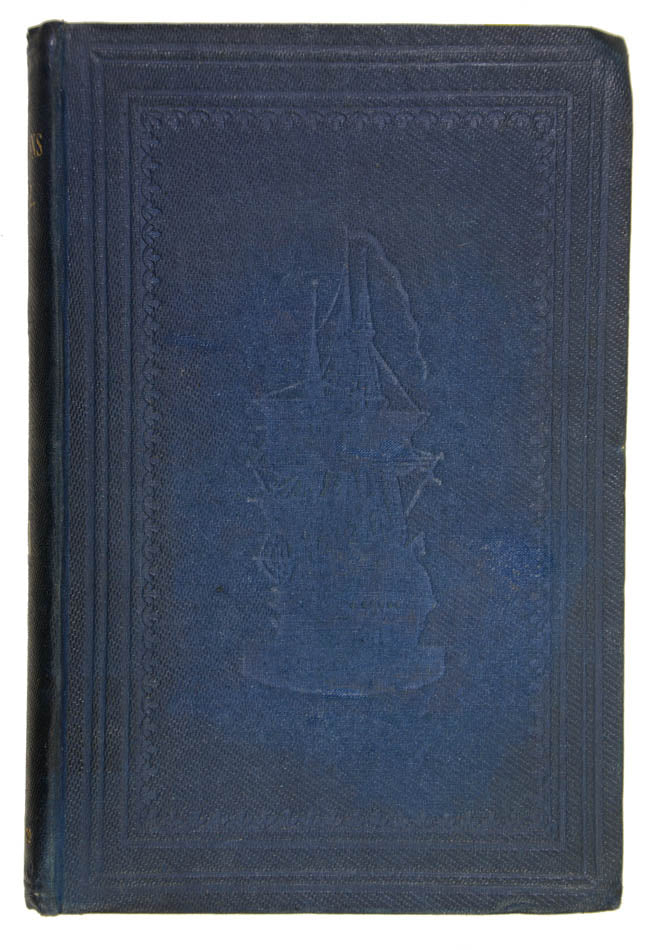
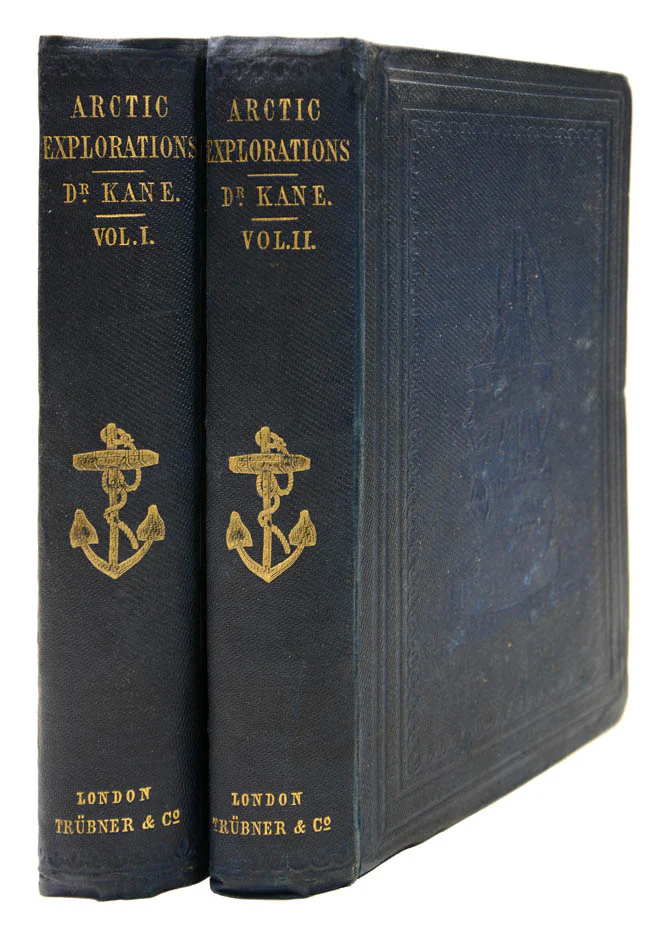
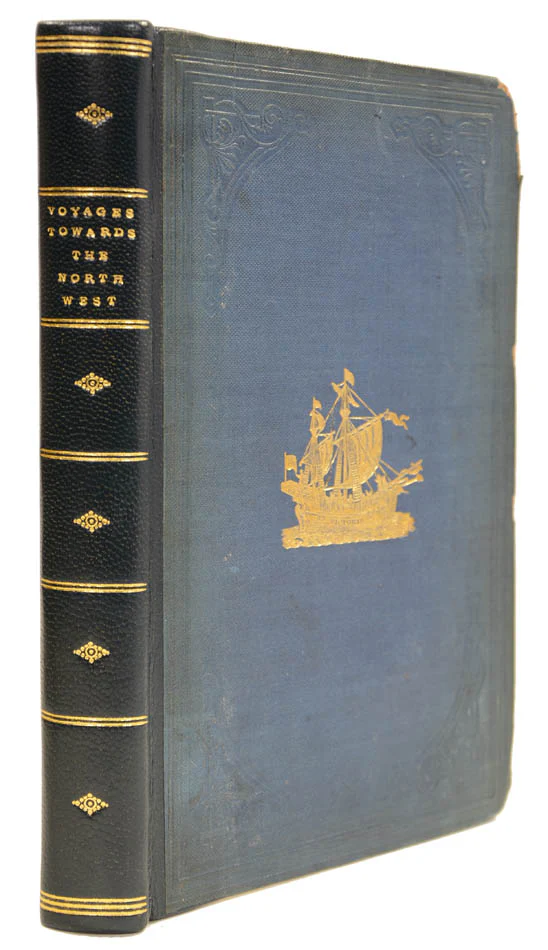
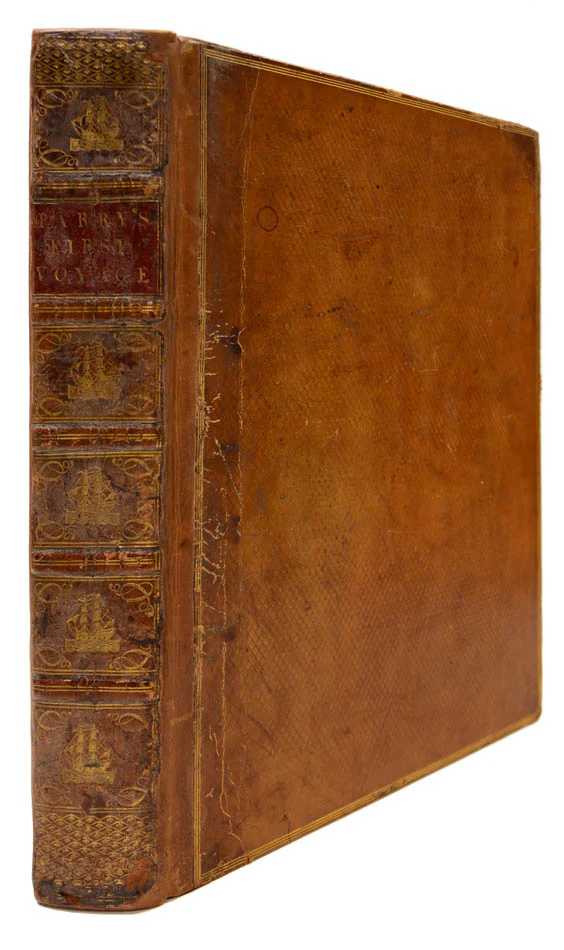
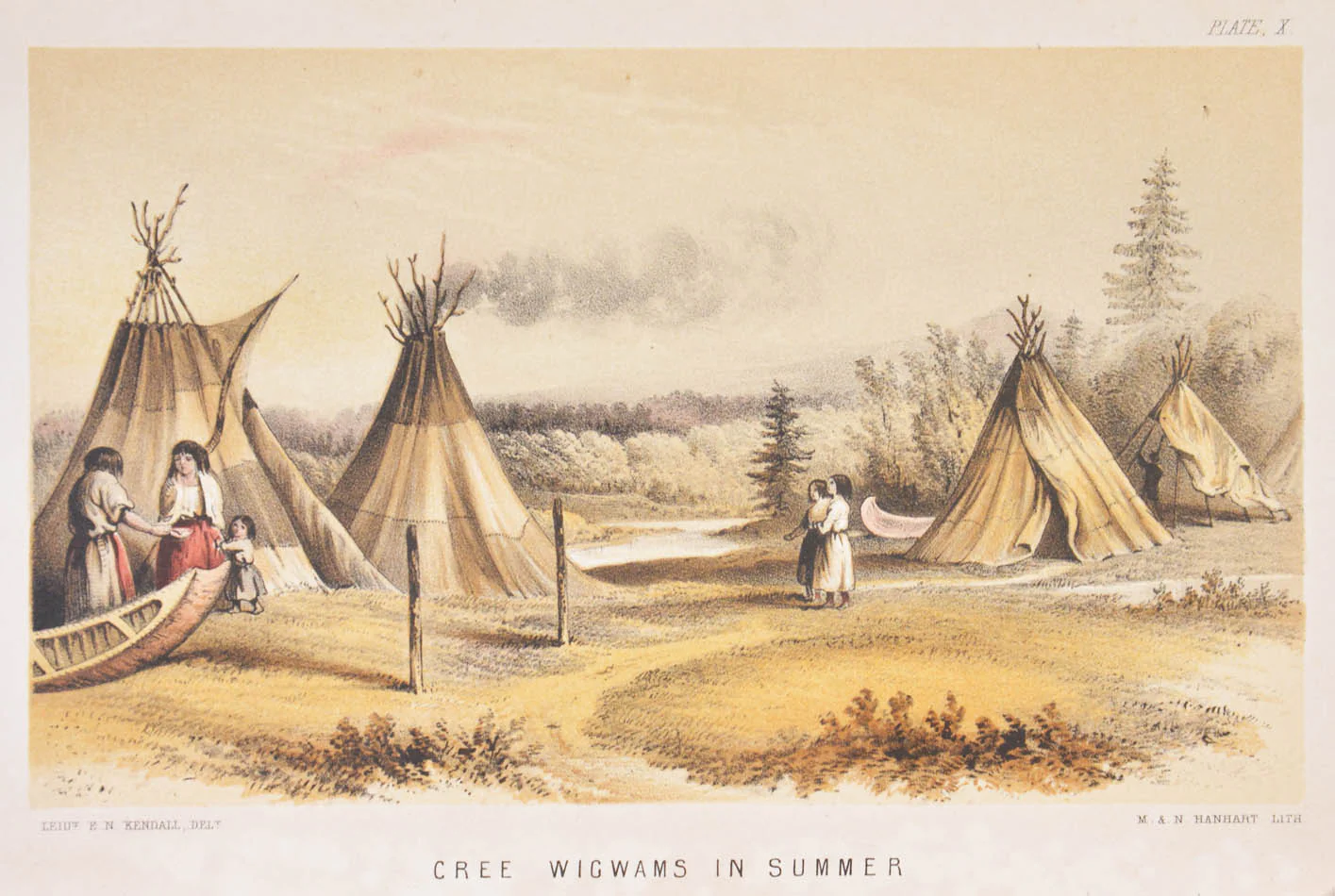
First edition; folio (33.5 x 21.5 cm); 16 folding maps, a few small splits to folds, 16 plates, further illustrations in the text; contemporary blue half roan, marbled boards, lightly faded, neat restoration to extremities, a very good copy; viii, 484 pp.
The Nares expedition, so called after its commander George Nares (1831-1915), sailed in two ships, HMS Alert and HMS Discovery, in late May of 1875 in quest of the North Pole. The ships reached Lady Franklin Bay on North Ellesmere Island and the Alert went on to reach the extreme north of the island, the highest latitude that had yet been reached by a ship. In April 1876, three separate sledge parties set out but the men showed serious signs of scurvy and several members died. Nares was forced to abandon the expedition and returned to England in September that year.
Despite the difficulties faced by the expedition, it did produce important scientific results including a study of Inuit dog disease and a volume of physical observations.
The Nares expedition is one of the best documented Arctic expeditions, with eight Parliamentary Blue Books alone devoted to it between 1875 and 1878. Arctic explorer Vilhjalmur Stefansson wrote '[The Arctic Blue Books] are beyond comparison the most important tool of knowledge in this field...'
First edition; folio (33.5 x 21.5 cm); 16 folding maps, a few small splits to folds, 16 plates, further illustrations in the text; contemporary blue half roan, marbled boards, lightly faded, neat restoration to extremities, a very good copy; viii, 484 pp.
$113,731.49
Original: $379,104.95
-70%Arctic Expedition, 1875-6.—
$379,104.95
$113,731.49Product Information
Product Information
Shipping & Returns
Shipping & Returns
Description
One of the most valuable sources for the history of exploration in northern Canada.
The Nares expedition, so called after its commander George Nares (1831-1915), sailed in two ships, HMS Alert and HMS Discovery, in late May of 1875 in quest of the North Pole. The ships reached Lady Franklin Bay on North Ellesmere Island and the Alert went on to reach the extreme north of the island, the highest latitude that had yet been reached by a ship. In April 1876, three separate sledge parties set out but the men showed serious signs of scurvy and several members died. Nares was forced to abandon the expedition and returned to England in September that year.
Despite the difficulties faced by the expedition, it did produce important scientific results including a study of Inuit dog disease and a volume of physical observations.
The Nares expedition is one of the best documented Arctic expeditions, with eight Parliamentary Blue Books alone devoted to it between 1875 and 1878. Arctic explorer Vilhjalmur Stefansson wrote '[The Arctic Blue Books] are beyond comparison the most important tool of knowledge in this field...'
First edition; folio (33.5 x 21.5 cm); 16 folding maps, a few small splits to folds, 16 plates, further illustrations in the text; contemporary blue half roan, marbled boards, lightly faded, neat restoration to extremities, a very good copy; viii, 484 pp.
The Nares expedition, so called after its commander George Nares (1831-1915), sailed in two ships, HMS Alert and HMS Discovery, in late May of 1875 in quest of the North Pole. The ships reached Lady Franklin Bay on North Ellesmere Island and the Alert went on to reach the extreme north of the island, the highest latitude that had yet been reached by a ship. In April 1876, three separate sledge parties set out but the men showed serious signs of scurvy and several members died. Nares was forced to abandon the expedition and returned to England in September that year.
Despite the difficulties faced by the expedition, it did produce important scientific results including a study of Inuit dog disease and a volume of physical observations.
The Nares expedition is one of the best documented Arctic expeditions, with eight Parliamentary Blue Books alone devoted to it between 1875 and 1878. Arctic explorer Vilhjalmur Stefansson wrote '[The Arctic Blue Books] are beyond comparison the most important tool of knowledge in this field...'
First edition; folio (33.5 x 21.5 cm); 16 folding maps, a few small splits to folds, 16 plates, further illustrations in the text; contemporary blue half roan, marbled boards, lightly faded, neat restoration to extremities, a very good copy; viii, 484 pp.