🚚 Free Worldwide Shipping on All Orders!Shop Now
1 / 5
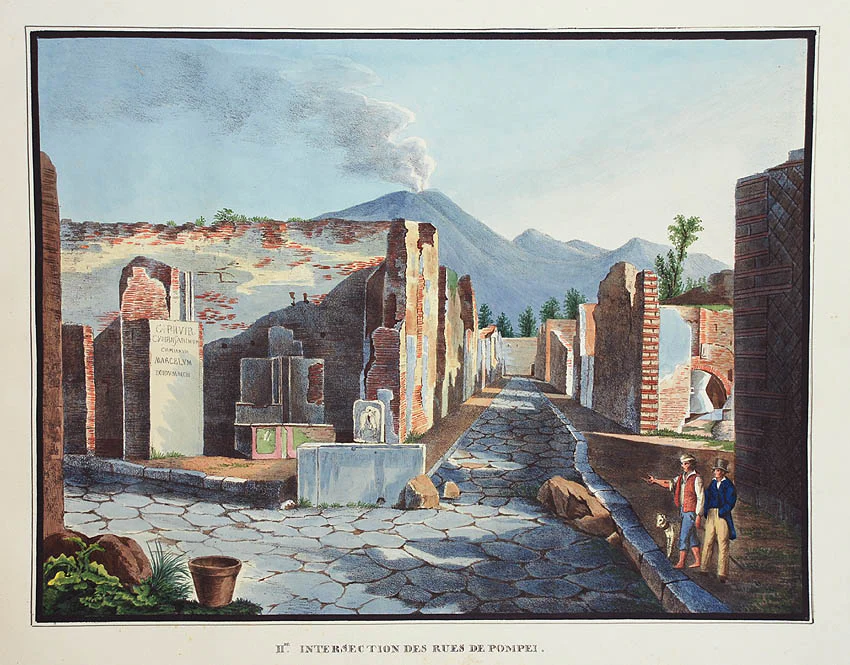
[Collezione di Vedute Pittoresche della Antica Città di Pompei].
After the excavations of the eighteenth century, Pompei became a must see attraction on any Grand Tour being taken by the great and the good of Europe.
Jakob Wilhelm Huber (1787-1871) went to Rome and later Naples as part of his apprenticeship to pursue his interest in Italian landscape painting. Eventually he developed a special concern for Naples and the nearby ruins of Pompeii. Sensing the preferences of his clientele, he recorded in 1817 in sketches and watercolours the picturesque ancient ruins.
This beautiful collection is one of the earliest examples of lithography in Naples. It is the only work printed in the year 1819 and few copies survive. The Journal of the Printing History Society (1997-95) claims only one copy (incomplete). There was an edition published in 1824-5 but in aquatint.
Landscape folio (41 x 54 cm); 20 (of 24?) hand-coloured lithograhed plates by C. Muller, lacking title-page, discreet ownership inscription to front free endpaper, tissues spotted; contemporary full red morocco, boards tooled in gilt with title of 'Ruines de Pompéia' lettered in gilt to upper board, board edges and turn-ins rolled in gilt, all edges gilt, extremities slightly rubbed, boards a little soiled, otherwise a very good copy.
Brunet III, 357.
Jakob Wilhelm Huber (1787-1871) went to Rome and later Naples as part of his apprenticeship to pursue his interest in Italian landscape painting. Eventually he developed a special concern for Naples and the nearby ruins of Pompeii. Sensing the preferences of his clientele, he recorded in 1817 in sketches and watercolours the picturesque ancient ruins.
This beautiful collection is one of the earliest examples of lithography in Naples. It is the only work printed in the year 1819 and few copies survive. The Journal of the Printing History Society (1997-95) claims only one copy (incomplete). There was an edition published in 1824-5 but in aquatint.
Landscape folio (41 x 54 cm); 20 (of 24?) hand-coloured lithograhed plates by C. Muller, lacking title-page, discreet ownership inscription to front free endpaper, tissues spotted; contemporary full red morocco, boards tooled in gilt with title of 'Ruines de Pompéia' lettered in gilt to upper board, board edges and turn-ins rolled in gilt, all edges gilt, extremities slightly rubbed, boards a little soiled, otherwise a very good copy.
Brunet III, 357.
$886,896.54
Original: $2,956,321.81
-70%[Collezione di Vedute Pittoresche della Antica Città di Pompei].—
$2,956,321.81
$886,896.54Product Information
Product Information
Shipping & Returns
Shipping & Returns
Description
After the excavations of the eighteenth century, Pompei became a must see attraction on any Grand Tour being taken by the great and the good of Europe.
Jakob Wilhelm Huber (1787-1871) went to Rome and later Naples as part of his apprenticeship to pursue his interest in Italian landscape painting. Eventually he developed a special concern for Naples and the nearby ruins of Pompeii. Sensing the preferences of his clientele, he recorded in 1817 in sketches and watercolours the picturesque ancient ruins.
This beautiful collection is one of the earliest examples of lithography in Naples. It is the only work printed in the year 1819 and few copies survive. The Journal of the Printing History Society (1997-95) claims only one copy (incomplete). There was an edition published in 1824-5 but in aquatint.
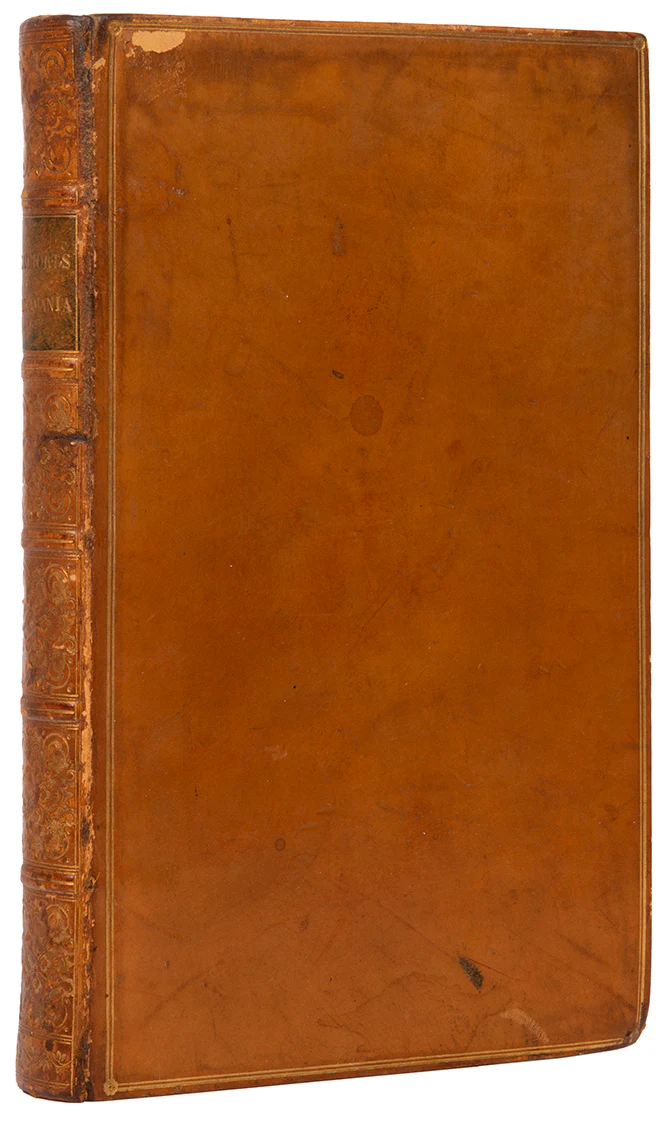
Landscape folio (41 x 54 cm); 20 (of 24?) hand-coloured lithograhed plates by C. Muller, lacking title-page, discreet ownership inscription to front free endpaper, tissues spotted; contemporary full red morocco, boards tooled in gilt with title of 'Ruines de Pompéia' lettered in gilt to upper board, board edges and turn-ins rolled in gilt, all edges gilt, extremities slightly rubbed, boards a little soiled, otherwise a very good copy.
Brunet III, 357.
Jakob Wilhelm Huber (1787-1871) went to Rome and later Naples as part of his apprenticeship to pursue his interest in Italian landscape painting. Eventually he developed a special concern for Naples and the nearby ruins of Pompeii. Sensing the preferences of his clientele, he recorded in 1817 in sketches and watercolours the picturesque ancient ruins.
This beautiful collection is one of the earliest examples of lithography in Naples. It is the only work printed in the year 1819 and few copies survive. The Journal of the Printing History Society (1997-95) claims only one copy (incomplete). There was an edition published in 1824-5 but in aquatint.
Landscape folio (41 x 54 cm); 20 (of 24?) hand-coloured lithograhed plates by C. Muller, lacking title-page, discreet ownership inscription to front free endpaper, tissues spotted; contemporary full red morocco, boards tooled in gilt with title of 'Ruines de Pompéia' lettered in gilt to upper board, board edges and turn-ins rolled in gilt, all edges gilt, extremities slightly rubbed, boards a little soiled, otherwise a very good copy.
Brunet III, 357.