🚚 Free Worldwide Shipping on All Orders!Shop Now
1 / 4
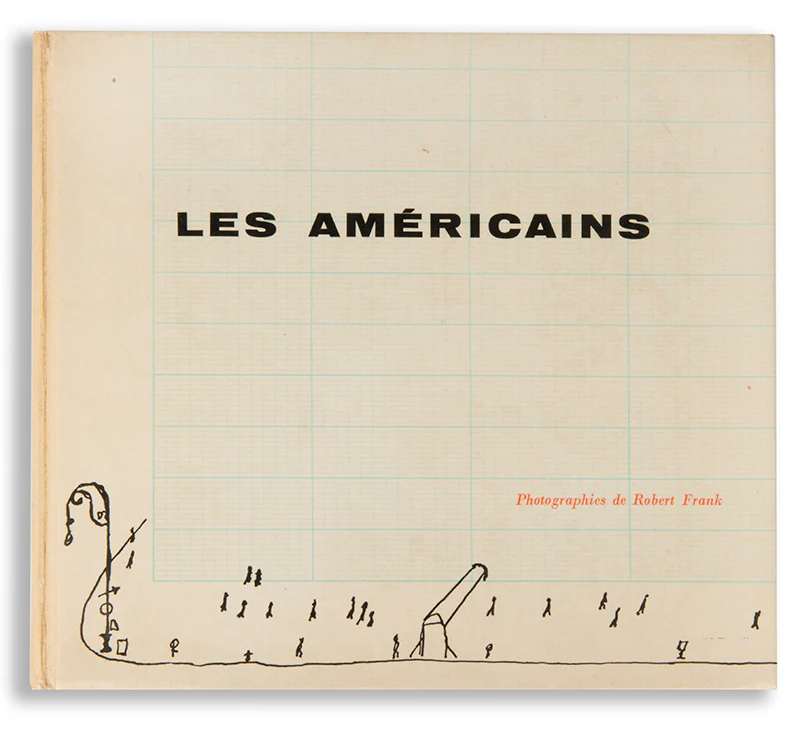
Les Américains.
association copy
An important presentation copy of the first published edition of Robert Frank's The Americans, a book that altered the course of twentieth-century photography and held a mirror to the American people, inscribed to Frank's friend and publisher Motomura Kazuhiko:'To Kazuhiko Motomura / who sees / what I see / and speaks Japanese / with my respects / Robert Frank. / NYC Oct. 30. 70.'
Motomura Kazuhiko was a civil servant who grew up watching Akira Kurosawa films, which led to his interest in visual art and black-and-white photography. He was an important collector of photographs and photography books and a tireless champion of Japanese photographers, promoting their work and supporting their books and exhibitions.
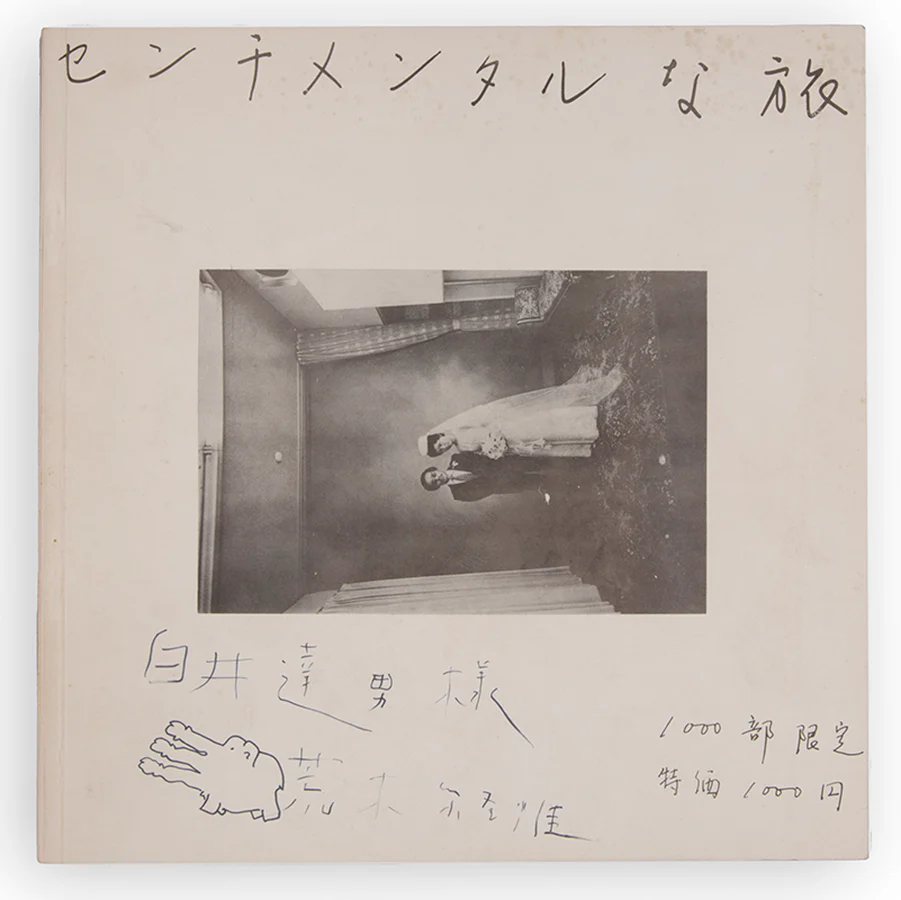
He published four books over a 37-year period: Robert Frank's The Lines of My Hand (1972), Flower Is (1987), and The Americans: 81 Contact Sheets (2009); Jun Morinaga's River, its shadow of shadows (1978); and helped organise or distribute others, including Mochizuki Masao's Television (2001) and Suzuki Kiyoshi's Tenmaku No Machi [A Town of Tents]: Mind Games (1982).
In 1960, Motomura worked as a tax officer. While still employed, he enrolled in the Shashin Sōgō Senmon Gakkō (now Tokyo College of Photography), where he was taught by Ishimoto Yasuhiro and Shigemori Koen. After participating in the demonstrations against the 1960 renewal of the US-Japanese security treaty, Motomura resigned from his position, fearing that his employers might penalise him. While studying photography, Motomura was introduced to Robert Frank's work when he saw the portfolio of thirty-eight photographs in US Camera Annual 1958 (of which twenty-three would appear in The Americans). Ishimoto Yasuhiro recommended that he buy Les Américains instead of The Americans because he thought the printing was better.
Motomura met and befriended Morinaga Jun at the Tokyo College of Photography. Morinaga assisted W. Eugene Smith on a commission for Hitachi that would become Japan: Chapter of Image (1963). Through Morinaga, Motomura met W. Eugene Smith, who introduced him to Robert Frank as a favour in return for Motomura helping Smith to organise a retrospective exhibition in Tokyo. In October 1970, Motomura and his classmate Hataya Norio travelled to New York to meet Robert Frank. During this trip, Motomura also visited W. Eugene Smith and his fiancé Aileen, and they discussed the idea of travelling to Minamata in Southern Japan to photograph the devastating effects of mercury poisoning on the local populace. In 1971, Smith and Aileen moved to Minamata, where they spent three years photographing and researching the devastating effects of mercury poisoning on the local populace. While working on the Minamata project, Smith's initial living costs in Japan were covered by Motomura Kazuhiko. When Motomura first met with Frank, Aileen acted as an interpreter.
Frank recounts this first meeting in the preface to The Lines of My Hand, in which he writes of how he was visited by two Japanese editors and inspired by their respect for his art and their eagerness to publish his book in Japan, a project he describes as reviving his interest in photography at a time when he had abandoned it for filmmaking:
'Well, one evening early late or middle last November, two Japanese gentlemen rang my bell on the Bowery. Mr. Kazuhiko Motomura and Mr. Toshio [Norio] Hataya did not speak any English or where [sic] too shy to try. They brought a girl who translated... I remember the evening very well. They said that they had always liked my photographs. They came to New York to ask my permission to have a book published of my work. Something like that had never happened to me. I was impressed and happy. They also gave me a small excellent taperecorder [sic] on which part of our conversation was recorded. Then they apologised that they hadn't given me a brand new one.
When the two gentlemen left I said to June, I'm really going to work on that and try to make it good. It was the right time for me, I was just finishing my last film "About me... A Musical". I had gone to Nova Scotia in the summer and bought a place in order to get away from it all and to see the clear Ocean and to be more alone. So once more, I go back to look at all these exposed memories, all these buildings, skies and people – lost and saved up...'
First edition, inscribed in black ink on half-title; oblong 8vo (185 x 210 mm, 7¼ x 8¼ in); black & white photographs printed in gravure by Draeger Frères, Montrouge, texts by various authors selected by Alain Bosquet, occasional minor spotting; plain thicker endpapers, sewn headband, laminated white paper-covered boards illustrated with an illustration by Saul Steinberg printed in light blue, black, and red, lightly toned, light creasing to upper joint, in Motomura Kazuhiko's card sleeve titled in black ink on upper side; 172, [2]pp.
Regards à travers Le Livre 120; The Open Book pp172–3; The Photobook: A History I, p247; Auer Collection p375; Swiss Photobooks pp218–227, pp666–7.
$3,411,140.55
Les Américains.—
$3,411,140.55
Product Information
Product Information
Shipping & Returns
Shipping & Returns
Description
association copy
An important presentation copy of the first published edition of Robert Frank's The Americans, a book that altered the course of twentieth-century photography and held a mirror to the American people, inscribed to Frank's friend and publisher Motomura Kazuhiko:'To Kazuhiko Motomura / who sees / what I see / and speaks Japanese / with my respects / Robert Frank. / NYC Oct. 30. 70.'
Motomura Kazuhiko was a civil servant who grew up watching Akira Kurosawa films, which led to his interest in visual art and black-and-white photography. He was an important collector of photographs and photography books and a tireless champion of Japanese photographers, promoting their work and supporting their books and exhibitions.
He published four books over a 37-year period: Robert Frank's The Lines of My Hand (1972), Flower Is (1987), and The Americans: 81 Contact Sheets (2009); Jun Morinaga's River, its shadow of shadows (1978); and helped organise or distribute others, including Mochizuki Masao's Television (2001) and Suzuki Kiyoshi's Tenmaku No Machi [A Town of Tents]: Mind Games (1982).
In 1960, Motomura worked as a tax officer. While still employed, he enrolled in the Shashin Sōgō Senmon Gakkō (now Tokyo College of Photography), where he was taught by Ishimoto Yasuhiro and Shigemori Koen. After participating in the demonstrations against the 1960 renewal of the US-Japanese security treaty, Motomura resigned from his position, fearing that his employers might penalise him. While studying photography, Motomura was introduced to Robert Frank's work when he saw the portfolio of thirty-eight photographs in US Camera Annual 1958 (of which twenty-three would appear in The Americans). Ishimoto Yasuhiro recommended that he buy Les Américains instead of The Americans because he thought the printing was better.
Motomura met and befriended Morinaga Jun at the Tokyo College of Photography. Morinaga assisted W. Eugene Smith on a commission for Hitachi that would become Japan: Chapter of Image (1963). Through Morinaga, Motomura met W. Eugene Smith, who introduced him to Robert Frank as a favour in return for Motomura helping Smith to organise a retrospective exhibition in Tokyo. In October 1970, Motomura and his classmate Hataya Norio travelled to New York to meet Robert Frank. During this trip, Motomura also visited W. Eugene Smith and his fiancé Aileen, and they discussed the idea of travelling to Minamata in Southern Japan to photograph the devastating effects of mercury poisoning on the local populace. In 1971, Smith and Aileen moved to Minamata, where they spent three years photographing and researching the devastating effects of mercury poisoning on the local populace. While working on the Minamata project, Smith's initial living costs in Japan were covered by Motomura Kazuhiko. When Motomura first met with Frank, Aileen acted as an interpreter.
Frank recounts this first meeting in the preface to The Lines of My Hand, in which he writes of how he was visited by two Japanese editors and inspired by their respect for his art and their eagerness to publish his book in Japan, a project he describes as reviving his interest in photography at a time when he had abandoned it for filmmaking:
'Well, one evening early late or middle last November, two Japanese gentlemen rang my bell on the Bowery. Mr. Kazuhiko Motomura and Mr. Toshio [Norio] Hataya did not speak any English or where [sic] too shy to try. They brought a girl who translated... I remember the evening very well. They said that they had always liked my photographs. They came to New York to ask my permission to have a book published of my work. Something like that had never happened to me. I was impressed and happy. They also gave me a small excellent taperecorder [sic] on which part of our conversation was recorded. Then they apologised that they hadn't given me a brand new one.
When the two gentlemen left I said to June, I'm really going to work on that and try to make it good. It was the right time for me, I was just finishing my last film "About me... A Musical". I had gone to Nova Scotia in the summer and bought a place in order to get away from it all and to see the clear Ocean and to be more alone. So once more, I go back to look at all these exposed memories, all these buildings, skies and people – lost and saved up...'
First edition, inscribed in black ink on half-title; oblong 8vo (185 x 210 mm, 7¼ x 8¼ in); black & white photographs printed in gravure by Draeger Frères, Montrouge, texts by various authors selected by Alain Bosquet, occasional minor spotting; plain thicker endpapers, sewn headband, laminated white paper-covered boards illustrated with an illustration by Saul Steinberg printed in light blue, black, and red, lightly toned, light creasing to upper joint, in Motomura Kazuhiko's card sleeve titled in black ink on upper side; 172, [2]pp.
Regards à travers Le Livre 120; The Open Book pp172–3; The Photobook: A History I, p247; Auer Collection p375; Swiss Photobooks pp218–227, pp666–7.